
Carlisle Pennsylvania Ordinance vs Resolution: What We Learned About How Our Borough Council Actually Makes Local Laws
Understanding the Legal Mechanisms Behind Carlisle Borough Council Decisions on Community Trust Policy
Introduction: When Procedure Becomes the Story in Our Community
Those of us who attended the recent Carlisle Borough Council meeting about the proposed Community Trust policy witnessed something that initially seemed like administrative minutiae but turned out to reveal the fundamental architecture of how our local government actually functions. The meeting room was packed with Carlisle residents ready to debate the merits of the welcoming community proposal itself, but before our council could even vote yes or no on the policy, they faced a more foundational procedural question that many of us had never considered: should this policy be enacted as a resolution or as an ordinance?
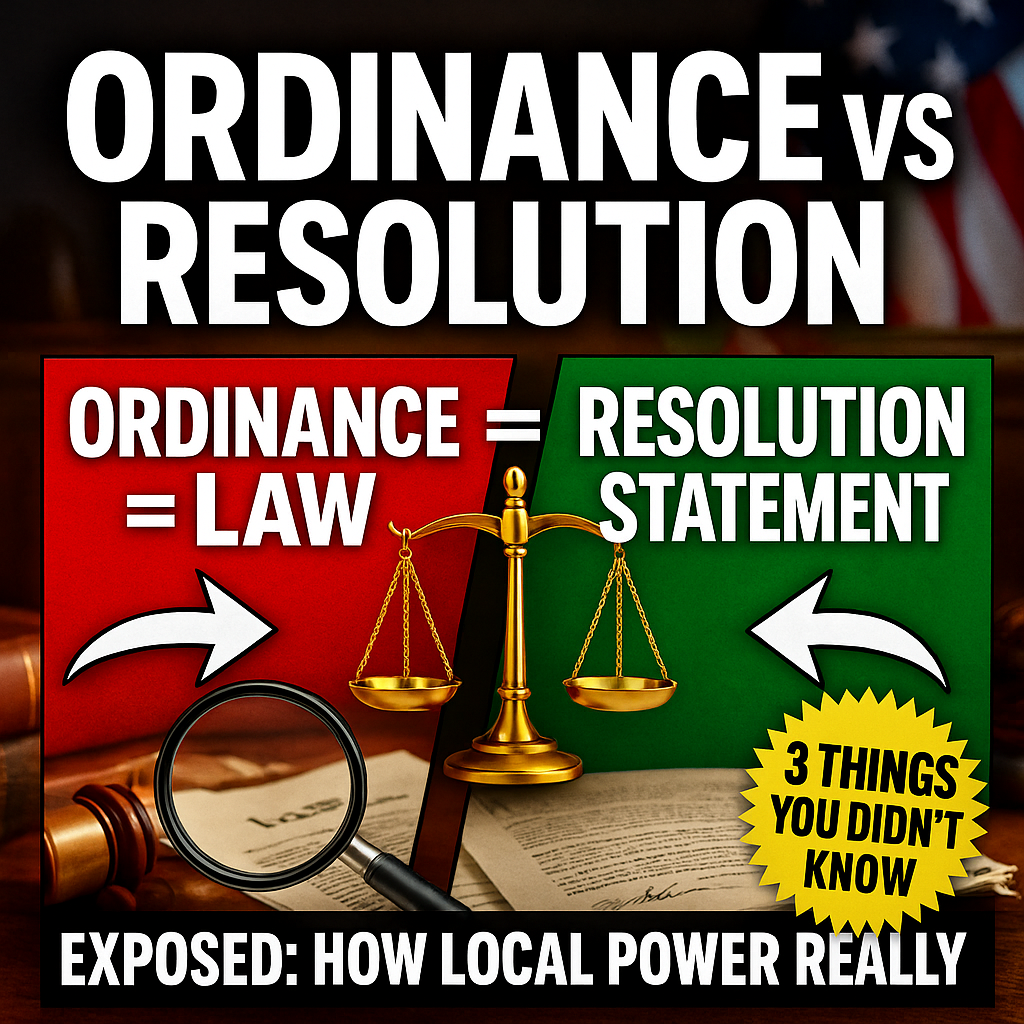
This distinction between a resolution and an ordinance might sound like the kind of technical jargon that most Carlisle residents would prefer to ignore, but what unfolded that evening demonstrated that this procedural choice carries enormous practical consequences for our community. The difference between these two legal mechanisms determines how quickly our borough can act, how permanent that action becomes, and how much power we as citizens retain to influence or reverse council decisions. Understanding this distinction provides essential insight into the hidden mechanics of local government in Carlisle and municipalities throughout Pennsylvania.
What follows is an account of three significant lessons about local lawmaking that emerged from our borough council’s deliberations, using the Community Trust policy debate as a real-world case study that helps explain how power actually works in our town.
How Speed and Deliberation Work in Carlisle Borough Council Lawmaking
The most immediate practical difference between a resolution and an ordinance became clear when our Deputy Mayor Landis explained to fellow council members and those of us in attendance that the procedural path chosen for the Community Trust policy would fundamentally determine the timeline for its potential enactment. This was not an abstract civics lesson but rather a concrete choice with real consequences for our community that week.
A resolution represents our borough government’s mechanism for swift, efficient action on matters that require prompt decision-making. Earlier in that same council meeting, we witnessed this efficiency in action when our council approved a resolution to apply for a grant funding opportunity. The entire process took only seconds. A council member made a motion, another seconded it, the council voted, and the business was complete. This streamlined process serves our community well for routine administrative tasks, day-to-day governance decisions, official statements of borough position, and time-sensitive matters like grant applications. If our council had chosen to enact the Community Trust policy as a resolution, supporters would have seen their desired policy implemented that very evening with a single vote.
An ordinance follows a markedly different and deliberately more extended pathway to becoming law in Carlisle. Deputy Mayor Landis detailed for us the formal multi-step process that Pennsylvania law requires for ordinances in our borough. An ordinance must be publicly advertised in a local newspaper, providing official notice to all Carlisle residents about the proposed law. The borough must then observe an approximate ten-day notification period before our council can hold a final vote on the measure. This mandatory waiting period means that an ordinance introduced at one council meeting cannot be adopted until a subsequent meeting, typically weeks later. The strategic calculation inherent in this choice became apparent to those of us watching the debate: an ordinance offers the advantage of permanence and legal weight, but the extended public notification process creates additional time for opponents to organize, mobilize, and potentially build resistance to the proposed policy.
The Mirror Image Principle: Understanding Repeal Requirements in Carlisle Borough Law
Deputy Mayor Landis articulated a governing principle of local lawmaking that proved revelatory for many Carlisle residents in attendance that evening. She explained what might be called the “mirror image rule” of municipal law: the procedural requirements for repealing or undoing a law must mirror the procedural requirements that were used to enact that law in the first place. This seemingly simple principle carries profound implications for the durability and strength of any policy our borough council adopts.
Because our council can pass a resolution quickly in a single meeting with a straightforward vote, a future borough council can repeal that same resolution just as easily with another simple vote. No public notification is required, no waiting period must be observed, and no multi-meeting process needs to unfold. If our current council had enacted the Community Trust policy as a resolution, that policy would represent a flexible statement of borough position, but it would also be inherently vulnerable. A future council with different priorities or political composition could eliminate the policy without advance public notice, potentially catching community members who support the policy entirely off guard.
The calculus changes dramatically with an ordinance. To repeal an ordinance in Carlisle, a future borough council would need to follow the exact same formal, multi-step process that was used to create the ordinance originally. This means public advertisement in our local newspaper, the ten-day notification period, and adoption at a subsequent council meeting. This procedural requirement creates a higher barrier to change, making an ordinance a more stable and enduring form of law for our community. The mirror image rule ensures that significant community policies, particularly those that carry the full weight of legal authority and can create penalties for violations, cannot be altered impulsively or without the same level of public process and deliberation that attended their creation.
For those of us who live in Carlisle, this principle means that ordinances serve as our borough’s mechanism for establishing foundational community rules that are meant to persist across election cycles and changing council compositions, while resolutions function as our government’s tool for more flexible governance and timely decision-making on matters where adaptability serves the community interest.
Direct Democracy and Representative Authority in Carlisle’s Home Rule Charter
One of the most illuminating moments of our council meeting came when the tension between two different pathways for making law in Carlisle became explicit. Many local governments throughout Pennsylvania, including our borough, provide mechanisms through which citizens can propose laws directly rather than relying solely on elected representatives to initiate legislation. In Carlisle, this participatory power is established in our Home Rule Charter, which contains both referendum and initiative provisions that give residents direct lawmaking authority under certain circumstances.
This issue became a point of contention during the meeting when our borough council read aloud a letter from Bert Lennon, a Carlisle resident who also serves on the charter commission. Lennon’s letter expressed frustration with the council’s approach to the Community Trust policy, arguing that the council was circumventing the proper process for controversial matters. His letter stated that the Home Rule Charter clearly explains how issues should be brought before the council and that these charter provisions were established to ensure that policy requests genuinely reflect what Carlisle residents as a whole want rather than what a smaller group of advocates or council members prefer. Lennon’s argument essentially advocated for what might be called the “people’s path” to lawmaking, suggesting that controversial policies should be required to demonstrate broad public support through the citizen-led initiative process before becoming borough law.
However, our borough’s legal counsel immediately provided crucial clarification that revealed a more complex picture of lawmaking authority in Carlisle. The counsel explained to our council and to those of us in attendance that while the referendum and initiative process does exist and provides citizens with genuine power to propose and enact laws, this citizen-led pathway is not the exclusive mechanism for creating ordinances in our borough. Our elected council retains its own independent authority to pass ordinances as part of its fundamental governing responsibility. The legal counsel specifically noted that the referendum and initiative process in our charter does not suggest that citizen petitions are the only way that ordinances can be passed in Carlisle.
This clarification exposed a fascinating and productive tension built into our borough’s governmental structure. Our council possesses the authority to legislate directly through representative democracy, exercising the judgment and decision-making power that Carlisle voters delegated to them through the electoral process. However, our legal counsel also noted that ordinances passed by the council can subsequently be challenged and potentially repealed by Carlisle voters through the referendum process, which represents direct democracy in action. This creates a meaningful balance of power in our community: our elected representatives can enact policies they believe serve the borough’s interests without waiting for citizen petitions, but they do so with the understanding that if they seriously misread the will of Carlisle residents, those residents retain the power to organize and overturn council decisions through the charter’s referendum provisions.
For those of us who live in Carlisle, this means our borough operates with dual lawmaking pathways that serve different but complementary functions. Our elected council can respond to emerging issues with the speed and expertise that full-time governance requires, while we as citizens maintain ultimate authority through our ability to initiate laws through petitions or to reject council ordinances through referendum. This structure prevents governmental paralysis while also preventing our elected officials from imposing policies that lack genuine community support.
What Borough Council Procedural Rules Mean for Carlisle Residents
The procedural mechanics that emerged during our borough council’s debate about the Community Trust policy reveal the fundamental architecture of local government power in Carlisle. The distinction between resolutions and ordinances is not merely technical jargon for lawyers and administrators but rather a practical framework that determines how responsive, stable, and accountable our borough government can be to the people who live here.
Resolutions provide our council with the agility to handle routine business, respond to time-sensitive opportunities, and make administrative decisions efficiently. Ordinances provide our community with stable, durable laws that create consistent expectations and cannot be changed without public notice and deliberation. The Home Rule Charter’s referendum and initiative provisions ensure that we as Carlisle residents maintain ultimate authority over fundamental policy directions while still allowing our elected representatives to govern effectively between elections.
Conclusion: From Administrative Procedure to Community Power in Carlisle
What began as a seemingly mundane procedural question at our borough council meeting about whether to use a resolution or an ordinance for the Community Trust policy turned out to be a window into how power actually functions in our community. The lessons that emerged that evening extend far beyond the specific welcoming community debate and provide those of us who live in Carlisle with essential knowledge about how our local government works.
Understanding that resolutions offer speed and flexibility while ordinances provide permanence and legal weight helps Carlisle residents evaluate the appropriate mechanism for different kinds of community decisions. Recognizing that the mirror image rule links a law’s durability to the procedural requirements for its enactment allows us to better assess the long-term implications of council actions. Appreciating the dual pathways of representative council authority and direct citizen participation through our Home Rule Charter empowers residents to engage more strategically with borough governance.
Deputy Mayor Landis’s explanations that evening transformed what could have been opaque legal terminology into comprehensible civic knowledge. The debate between those who believed the council should act directly and those who argued that controversial policies should follow the citizen initiative pathway highlighted genuine questions about when representative democracy versus direct democracy better serves our community interests. Our borough’s legal counsel clarified that both pathways are legitimate and legally valid, leaving the political and practical judgment about which approach to use in any particular circumstance to be resolved through the democratic process itself.
For those of us who attended that borough council meeting, the procedural discussion provided clarity about the mechanics of local lawmaking. For Carlisle residents who were not present, understanding these mechanisms offers valuable insight into how decisions that affect our daily lives in this community are actually made, how stable or vulnerable those decisions are to future change, and what options we have as citizens to influence or challenge the policies our borough government adopts.
The fundamental question that our council faced that evening was not ultimately resolved in the portions of the meeting discussed here: whether the Community Trust policy should be enacted as a swift resolution or a more permanent ordinance. That choice carries implications about how quickly our community could act, how durable that action would be, and how much opportunity opponents would have to mobilize resistance. But regardless of which path our council ultimately chose for that particular policy, the procedural lessons that emerged from the debate now equip Carlisle residents with a deeper understanding of how our borough government actually functions and how we as citizens can most effectively participate in shaping the community we share.